Stop Paying for Other People’s Mistakes:Why General Contractors Need These Three Clauses in Every Subcontract Agreement
In construction, every successful project starts with more than a blueprint, it starts with a solid contract. For general contractors, having written agreements with subcontractors isn’t optional; it’s essential for managing risk and protecting their business.
A well-drafted subcontractor contract that includes indemnity and hold harmless clauses ensures that responsibility falls where it belongs—on the party who caused the issue. Without these protections, general contractors can be held liable for accidents, damages, or mistakes beyond their control. These clauses safeguard both the project and the contractor’s reputation, keeping operations fair, clear, and legally secure.
The Foundation: A Solid Subcontract Agreement
A basic subcontract tells a sub what to do and how much they'll get paid. A smart subcontract does one more critical thing: it clearly defines who is on the hook when there’s a problem.
Without a clear contract, any issue (a delay, an accident, property damage) instantly becomes a stressful argument about who pays. A clear, written contract eliminates confusion and ensures everyone knows their role and their responsibilities before work starts.
The Financial Lifeline: The Indemnity Clause
What it is:
A promise from the subcontractor to pay your legal costs and damages if an issue arises from their work.
How it protects your money:
You're the Target: If a customer's property is damaged, or a worker is injured, the injured party usually sues the GC first, even if the mistake was made by the sub.
Shifting the Bill: The Indemnity clause legally forces the subcontractor to cover the costs and insurance claim. If the Plumber’s mistake floods the building, they pay for the repair—not you.
Bottom Line:
Indemnity guarantees the sub takes financial responsibility for the direct consequences of their actions.
The Ultimate Defense: The Hold Harmless Clause
What it is:
A promise from the subcontractor not to blame you (the GC) for any claims or losses related to their work.
How it protects you from lawsuits:
Stopping Internal Suits: It prevents the subcontractor (or anyone connected to them) from suing you over issues that are clearly their fault.
Insulation from Third Parties: If a plumber's employee is hurt because the plumber ignored a safety rule, the employee might sue the plumber and you. The Hold Harmless clause legally obligates the plumber to handle the defense and costs, protecting you from financial loss and a claim on your insurance.
Bottom Line:
Hold Harmless ensures the sub legally accepts the risk of their performance and agrees to keep you out of the resulting liability claims.
The Peacekeeper: The Waiver of Subrogation
The first two clauses protect you from the subcontractor. This third clause protects you from the subcontractor's insurance company.
What it is:
The Waiver of Subrogation is a contract provision that makes the subcontractor and their insurance company give up the right to sue you to recoup costs they paid on a claim.
How it protects the project:
No “Blame Game” Lawsuits: Imagine a fire starts due to a sub's negligence.Your insurance pays out to repair the damage. Usually, your insurer would then legally "step into your shoes" and sue the negligent subcontractor to get recover the financial loss.
Smooth Construction: The Waiver of Subrogation says: No lawsuits. The insurance company that paid the claim must accept the loss and cannot pursue the at-fault sub or the GC.
Preserving Relationships: This clause is essential for complex projects because it ensures that all parties can rely on their insurance to cover losses without the threat of constant legal battles, saving you time and preserving working relationships.
Bottom Line:
This clause is critical for project continuity, preventing insurance companies from initiating the very disputes Indemnity and Hold Harmless agreements are designed to avoid.
No “Blame Game” Lawsuits
Imagine a fire breaks out because an electrician’s employee accidentally overloads a circuit. The damage spreads quickly, causing tens of thousands of dollars in repairs. Your builder’s risk insurance pays to fix the structure so the project can move forward.
Normally, once the claim is paid, your insurer could “step into your shoes” and sue the subcontractor—or their insurer—to recover that payout. This is called subrogation. It can trigger a chain reaction of legal disputes between you, the subcontractor, and multiple insurance companies.
With a Waiver of Subrogation in place, that entire scenario is avoided. Your insurance company accepts the loss and moves on. The subcontractor’s insurer can’t pursue you or your carrier for reimbursement. Everyone stays focused on finishing the project instead of fighting lawsuits.
Summary: Your Risk Management Strategy
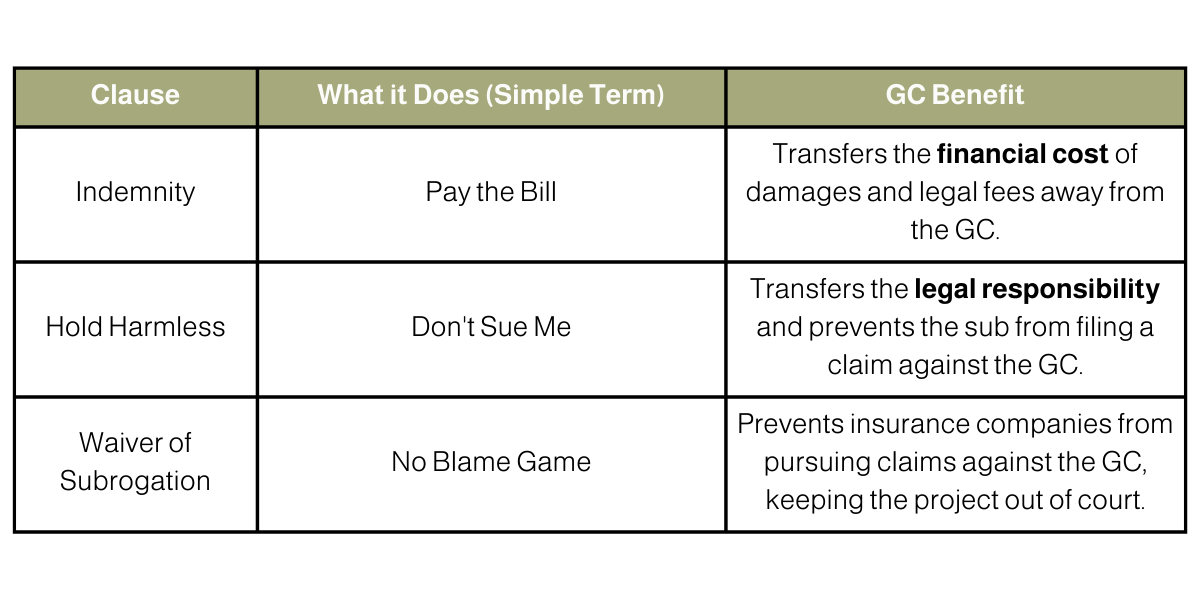
In the construction business, you cannot eliminate risk, but you can certainly control who pays for it. By utilizing these three powerful clauses, you ensure your company's profit and reputation are safeguarded, allowing you to focus on what you do best: building successful projects.
Contact us today to learn more.
Always consult with legal and insurance professionals to ensure these clauses are customized to your state's laws and your specific project needs.