Stop Paying for Other People’s Mistakes: Why General Contractors Need These ThreeClauses in Every Subcontract Agreement
Overview
In construction, every successful project starts with more than a blueprint; it starts with a solid contract. For general contractors, having written agreements with subcontractors isn’t optional, it’s essential for managing risk and protecting their business.
A well-drafted subcontractor contract that includes indemnity and hold harmless clauses ensures that responsibility falls where it belongs, on the party who caused the issue. Without these protections, general contractors can be held liable for accidents, damages, or mistakes beyond their control.
These clauses safeguard both the project and the contractor’s reputation, keeping operations fair, clear, and legally secure.
The Foundation: A Solid Subcontract Agreement
A basic subcontract tells a sub what to do and how much they'll get paid. A smart subcontract does one more critical thing: it clearly defines who is on the hook when there’s a problem.
Without a clear contract, any issue (a delay, an accident, property damage) instantly becomes a stressful argument about who pays. A clear, written contract eliminates confusion and ensures everyone knows their role and their responsibilities before work starts.
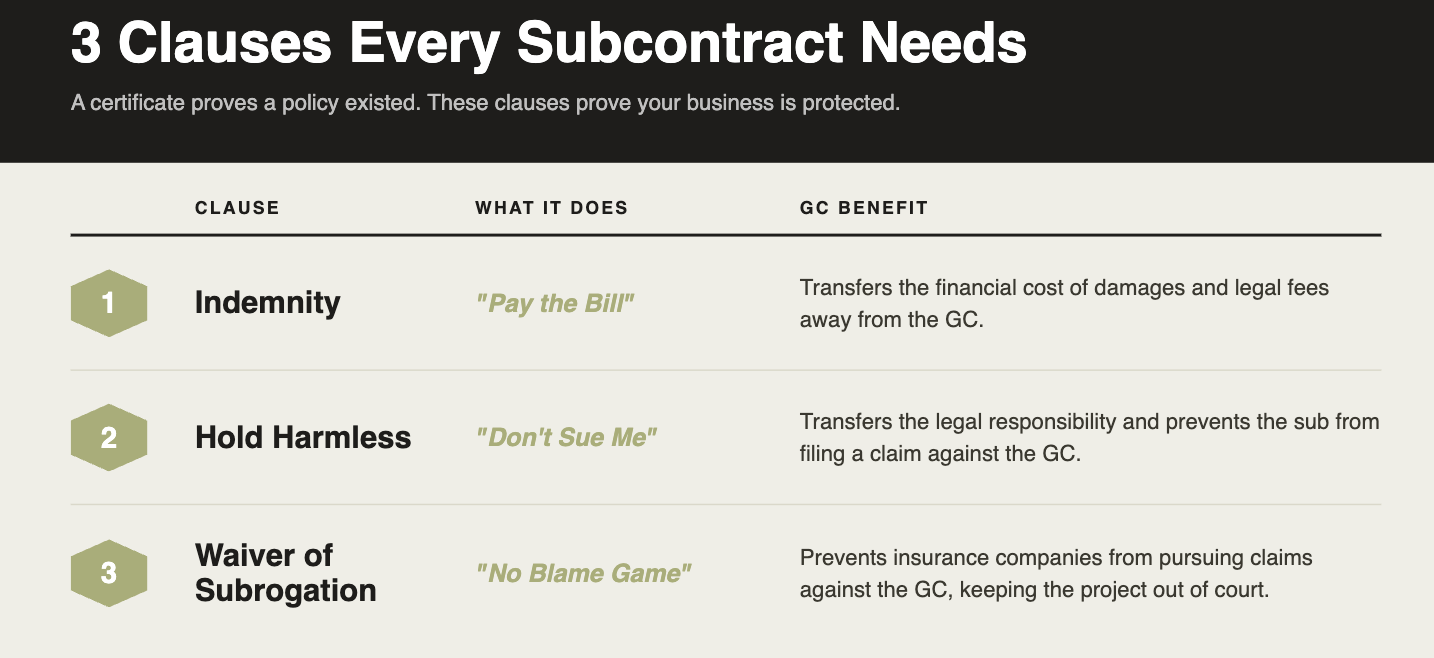
The Financial Lifeline: The Indemnity Clause
What it is: The sub’s promise to defend, indemnify, and hold you harmless if a claim arises from their work.
How it protects your money:
You're the Target: If a customer's property is damaged, or a worker is injured, the injured party often sues the GC, even if the mistake was made by the sub.
Shifting the Bill: The clause contractually requires the sub to pay your defense costs and damages. If the plumber’s mistake floods a customer’s building and the customer sues you, the plumber is responsible, not you.
Injured Workers: If the plumber’s employee is hurt on your job, workers’ comp generally prevents them from suing their own employer, so they may sue you instead. The clause makes the plumber responsible for your defense and costs.
Bottom Line: The sub takes financial responsibility for the direct consequences of their work.
The Direct Line: Additional Insured Status
What it is: The subcontractor adds you as an additional insured on their General Liability policy. This gives you direct coverage under their policy, including a defense, for claims caused by the sub’s work.
Why you need both:
Ongoing Operations: Covers you while the sub is working on your job.
Completed Operations: Covers you after the sub’s work is finished, when construction defect and water damage claims often surface. These are usually separate endorsements, so require both.
Bottom Line: Being listed as a certificate holder is not the same as being an additional insured. Ask for a copy of the endorsement.
The Tiebreaker: Primary & Non-Contributory
What it is: A subcontract requirement, backed by an endorsement on the sub’s policy, that makes their policy pay first (primary) without asking your policy to share the loss (non-contributory).
How it protects you:
Their Policy Pays First: Without it, the sub’s insurer may argue your policy should split the loss, pulling your coverage into a claim you didn’t cause.
Protects Your Loss History: Keeping their claims off your policy helps protect your limits, loss runs, and renewal pricing.
Bottom Line: Additional insured status puts you on their policy. Primary & non-contributory makes sure their policy pays before yours.
The Peacekeeper: The Waiver of Subrogation
The clauses above protect you from the subcontractor's negligence. This one protects you from their insurance company. Without it, their insurer can pay a claim and then sue you to get that money back.
What it is: The subcontractor’s insurer gives up its right to recover from you what it paid on a claim. That recovery right is called “subrogation.”
How it protects the project:
No “Blame Game” Lawsuits: A sub’s employee is hurt on your job. The sub’s workers’ comp carrier pays the claim and, without a waiver, could then sue you to recover what it paid if it believes you contributed to the injury. The waiver stops that.
Smooth Construction: The same applies to the sub’s General Liability and Auto policies. Their insurer pays the claim and stops there, instead of coming after you.
Preserving Relationships: The sub’s insurance handles the loss without a legal fight following behind it.
Bottom Line: It keeps a covered loss from becoming a legal fight. Waivers are added by endorsement, so confirm the waiver is on the sub’s policies, not just in the contract.